

A deep dive into how Organised Crime Groups operate
4th April 2025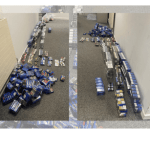
Canine tobacco dogs sniff out over £85k worth of illegal tobacco and vapes.
4th April 2025OP SHIELD MISSION: Protect Vulnerable People

Our Protecting Vulnerable People Unit (PVP) exists to support the most vulnerable people in the Humberside Police area, and so naturally they’ve joined forces with the Op Shield teams to do just that.
The unit consists of several functions that lead on the core strands of vulnerability including:
- Adults and child safeguarding
- Child sexual exploitation
- Female genital mutilation and honour based abuse
- Forced marriage
- Modern day slavery
- Management Of Sexual and Other Violent Offenders
- Police Online Investigations Team (POLIT)
- Serious sexual offences
PVP also deals with domestic abuse related cases if they relate to any sexual offences or child abduction incidents and will work with the Domestic Abuse and Safeguarding Investigation Teams (DASIT).
The vulnerability hub supports LOCATE with their partnership working and information sharing with regards to missing persons, and although stalking and harassment is led again by DASIT, PVP will deal with any incidents of stranger stalking.
Authorities have been speaking to Detectives who work within different areas in the unit to give an insight into their work and where it comes from as part of #OpShield. This week, they caught up with Detective Chief Inspector Jim Clough who heads up the PVP core team who deal with the most serious cases of child abuse and sex offences.
What kind of crimes do you deal with?
My team deals with the most serious cases of child abuse and sex offences from rape and sexual assault to recent and non-recent cases of child abuse, sexual offences involving offenders in positions of trust and other forms of interfamilial abuse.
How are crimes usually reported to you and how many reports do you receive each year?
We receive a huge number of intense and complex cases each year and we can have anything up to 1500 open cases at any one time.
This is because of the complexities around each case, and the need to gather numerous amounts of evidence such as digital forensics, CCTV, witness statements, medical forensic results, third party material from social services, schools, doctors, care workers and the like, and then submitting this all to the Crown Prosecution Service.
A lot of our reports come in via 999 if someone is in immediate danger or an incident is ongoing, and this is where our Force Control Room will dispatch patrol officers to deal with the incident within the initial golden hour principle. They will gather the initial evidence, seize clothing to be fast-tracked to forensics, identify CCTV opportunities, take hand swabs, and arrange any other medical swabs, and of course obtain the most important part – the victim account.
This will then be triaged to the PVP Core team and reviewed by one of our Detective Sergeant’s or specialist Detective Inspector’s ready to be fully handed over to the right team within PVP.
From here, they will produce a victim and suspect strategy, a safeguarding plan addressing any immediate risk and investigation plan, where a DI would provide direction and guidance of what the initial enquiries need to be.
We then also receive reports through our non-emergency number 101 which is mostly used for any non-recent sexual offences and through referrals from our external partners who may have received direct disclosures from a victim.
To us, non-recent is anything after seven days old because after that, we’re out of the crucial forensic window to gather evidence.
What do you do to investigate a report?
Non-recent reports of sex offences and abuse are some of the most difficult crimes to investigate. My officers work around the clock to obtain accounts and statements from the victim or victims.
As you can imagine, if we have a lot of cases of child abuse where the victims are some of the most vulnerable in society, whether that be under the age where they can talk for themselves, or if they have learning difficulties, disabilities, or other vulnerabilities, it’s not as simple as just taking their account of the incident.
We have to contact third party organisations and partners to act as an intermediary and offer advice to both our officers on how best to communicate with the vulnerable person, and vice versa.
Where necessary, we will take video recorded evidence from victims and in some cases, witnesses and this is carefully pre-planned to ensure that they’re given the best opportunity in the best environment to provide their accounts.
Officers will then review their accounts and talk to witnesses such as family members, friends, maybe their social worker, or if they’re of school age, their teachers, or counsellors. We then need to piece it all together to provide enough evidence to the CPS to prove beyond reasonable doubt that the accused is guilty.
Live cases are slightly difference because if we’re working within that all important golden hour, there is a lot to go at! It’s a full team effort and everyone knows their role – I will have officers out trawling appropriate CCTV from around the time the incident may have occurred, the hours leading up to and after it, and anything else they may spot to give us clues as to who we’re looking for.
Others will be taking witness statements, and we may even utilise our corporate communications department to issue media appeals so more witnesses, or more victims, come forward with information.
We will seize clothing, take physical swabs, undertake medical examinations, gather mobile phone and social media data, and obtain disclosure, again, from third parties.
Partnership working is key when it comes to investigating crimes of this nature and we build bespoke suspect strategies as a result of working with the likes of children and adult services.
We will share relevant information with them and discover whether they may have had any previous contact with the suspect, or victim in some cases, so we can gain a better understanding of what, if any, previous disclosure has been made that may be pertinent to the investigation.
We will prioritise any arrests within the forensic window, those who pose a risk to the wider public or to the victim again, and anyone who is in a position of trust or power.
Our biggest priority whilst working through all the above, is ensuring our victim or victims are safeguarded every step of the way. Officers will also have a victim-focused strategy that they will adhere to and honour depending on what has been agreed with any third-party individuals, family members or other.
How long does the process – of receiving a report to charging – usually take
It completely depends on the case, but for those investigations resulting in charges against a suspect, it can take a couple of years or sometimes more from arrest to the case going to court. As mentioned, this is largely due to the complexities of the work undertaken by our officers in often gathering hundreds of pages of disclosure or evidence, reviewing them, waiting for medical or counselling records, school, or social service records, and of course forensics.
CSI and digital forensics carry out incredibly detailed analysis of physical and digital evidence to assist us in our investigations. Their work provides vital evidence to help us charge suspects quickly and ultimately help prevent more of these abhorrent crimes being committed.
In the most serious and high-risk cases, we will seek an early charge and get the suspect very swiftly remanded into custody within a five-day window or less.
In the longest cases, we have to bear in mind that we may have multiple suspects and victims as part of the same case, they’re complicated, complex, and I cannot stress enough how much we rely on any third-party records to help bring those responsible to justice.
Applying for confidential records from doctors or counsellors take an extremely long time and due to confidentiality, there is a very strict process to go through to get them provided to us, which adds more time onto the case.
As I’ve mentioned already, in cases involving young children we have to work really closely with CSI to build a picture; medical records take months, we have to wait for a doctors’ expert opinions which also take months, in some cases they also have to physically examine babies and rely on forensic evidence to tell the story.
We also have an under 10 protocol for victims under the age of 10 years old, which is there to speed up the charging process managed by CPS.
What happens to a suspect if they are arrested but there isn’t enough evidence to charge or prosecute them at the time?
Suspects can be bailed or released under investigation following their arrest whilst we continue our enquiries.
However, due to the nature of their suspected offending, these usually come will very strict restrictions to prevent further offending, risk posed or any further threat to the wider public.
These might be regularly reporting to police stations, having unexpected visits to their home from officers, and sometimes the seizure of all their devices, if necessary, too.
Not only this, but to mitigate the risk with any suspects that may need to be bailed, whether that be by the police or the courts, we will also consider obtaining risk orders such as Sexual Risk Orders, Sexual Harm Prevention Orders, Domestic Violence Prevention Orders, or Stalking Protection Orders.
On average per month though across our force area, we could have in excess of 250 live prisoners for both recent and non-recent offences.
How does your team ensure victims are cared for?
Victim care is a huge priority across the force. We work alongside our other colleagues in PVP to ensure victims are safeguarded and that they receive regular updates on their cases.
Exactly how each victim is safeguarded depends on individual circumstances. We may phone or visit victims face to face if they wish. In other cases, we may liaise with them via our partners at Hull City Council’s social services and other agencies or charity organisations.
This includes working alongside sexual victim advisors managed by our partners at Blue Door, who act as a triage between our officers and the victim. Children can also be allocated a social care worker if appropriate.
Each investigation has an OIC (officer in charge of the case) and for the more serious cases, a SIO (senior investigating officer) dedicated to it, meaning that if victims, or their families, want to speak about anything relating to their case or safety, they have a point of contact they can speak directly to.
To continue to improve our approach to the way we manage and investigate Rape and serious sexual offences, we have started to integrate best practice identified in Operation Soteria which is a national review of how police deal with rape and serious sexual offences. We rely on our partner agencies to help and support with every aspect from identifying suspects to supporting victims to improve the ratio of convictions, specifically with regards to one-on-one allegations that might not have any witnesses or disclosures made to third parties.