Funding Available for Return of Grassroots Football in England
19th March 2021Hull: Scam Covid-19 spot check emails
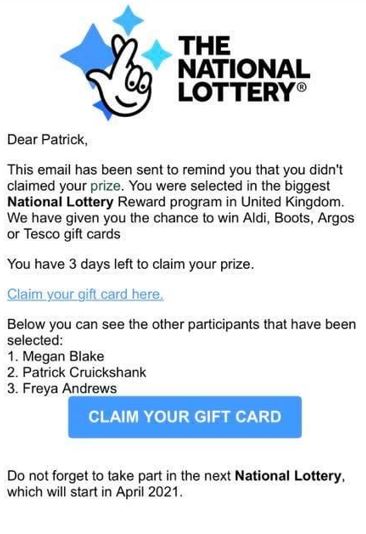
19th March 2021Hull: National Lottery scam
Lottery, sweepstake or prize draw fraud happens after fraudsters contact you to tell you you’ve won a large sum of money in an international lottery, sweepstake or other prize draw.
You’re told via email or letter that you have won a large amount of money on an overseas or online lottery. Spanish, Canadian and Australian lotteries are among the most common.
So that you can process the payment of your winnings, it asks you to contact someone who claims to be an official at the lottery company. You are warned to keep your good luck a secret and, if you don’t respond quickly, you won’t be able to claim your winnings.
However, either the lottery doesn’t exist or you’ve been contacted by fraudsters misusing the name of a genuine lottery. But you can be sure there is no prize money for you to win.
If you respond to the fraudster, you’ll be asked to supply personal information and copies of official documents, such as your passport, as proof of identity. The fraudsters can then use this information to steal your identity.
Once you have provided your personal information, the fraudsters will ask you to pay various fees – for example: taxes, legal fees, banking fees etc. – so that they can release your non-existent winnings.
Each time you make a payment, the fraudsters will come up with a reason why your winnings can’t be paid out unless you make another payment. They’ll also give you reasons why the fees can’t be taken out of your winnings and have to be paid upfront.
The fraudsters may also ask for your bank details, saying they will pay your winnings directly into your bank account. But if you hand over your bank details, the fraudsters will use them to empty your account.
What should you do if you’re a victim of lottery fraud?
- Report the fraud to Action Fraud.
- If you have responded to the email/letter, break off all contact with the fraudsters at once.
- If you have given the fraudsters your bank account details, alert your bank immediately.
- Be aware that you’re now likely to be a target for other frauds. Fraudsters often share details about people they have successfully targeted or approached, using different identities to commit further frauds.
- People who have already fallen victim to fraudsters are particularly vulnerable to the fraud recovery fraud. This is when fraudsters contact people who have already lost money through fraud and claim to be law enforcement officers or lawyers. They advise the victim that they can help them recover their lost money – but request a fee.